Tear gas

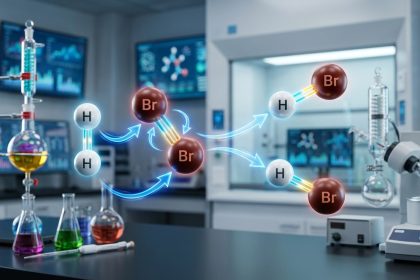
A lachrymatory agent or lachrymator (from lacrima meaning "a tear" in Latin; commonly referred to as tear gas) is a chemical compound that stimulates the corneal nerves in the eyes to cause tearing, pain, and even blindness. Common lachrymators include CS, CR, CN, nonivamide, bromoacetone, phenacyl bromide, xylyl bromide and syn-propanethial-S-oxide (from onions). Lacrymators often share the structural element Z=C-C-X, where Z = carbon or oxygen, and X = bromide or chloride.

3-quinuclidinyl benzilate (QNB, BZ, EA-2277), IUPAC name 1-azabicyclo[2.2.2]Oct-3-yl α-hydroxy-α-phenylbenzeneacetate, is an odorless military incapacitating agent.[1] Its NATO code is BZ. The Iraqi incapacitating agent Agent 15 is believed either to be the same as or similar to BZ.

Australia (pronounced /əˈstreɪljə/ ə-STRAYL-yə or /ɒˈstreɪljə/ o-STRAYL-yə,[7] or more formally as /ɔːˈstreɪliə/ aw-STRAY-lee-ə), officially the Commonwealth of Australia, is a country in the Southern Hemisphere comprising the mainland of the Australian continent (the world's smallest),[8][9] the island of Tasmania, and numerous smaller islands in the Indian and Pacific Oceans.N4 Neighbouring countries include Indonesia, East Timor, and Papua New Guinea to the north, the Solomon Islands, Vanuatu, and New Caledonia to the north-east, and New Zealand to the southeast.

A blister agent (also known as a vesicant) is a chemical compound that causes severe skin, eye and mucosal pain and irritation. They are named for their ability to cause severe chemical burns, resulting in large, painful water blisters on the bodies of those affected. Although these compounds have been employed on occasion for medical purposes, their most common use is as chemical warfare agents.A blood agent is a toxic chemical agent that affects the body by being absorbed into the blood.[1] They are fast-acting, potentially lethal poisons that typically manifest at room temperature as volatile colorless gases with a faint odor.[1] Blood agents are either cyanide- or arsenic-based.[1]

A chemical compound (frequently shortened to compound) is a pure chemical substance consisting of two or more different chemical elements[1][2][3] that can be separated into simpler substances by chemical reactions.[4] Chemical compounds have a unique and defined chemical structure; they consist of a fixed ratio of atoms[3] that are held together in a defined spatial arrangement by chemical bonds. Chemical compounds can be compound molecules held together by covalent bonds, salts held together by ionic bonds, metallic compounds held together by metallic bonds, or complexes held together by coordinate covalent bonds. Substances such as pure chemical elements and elemental molecules consisting of multiple atoms of a single element (such as H2, S8, etc.) are not considered chemical compounds.[5]Chlorine (pronounced /ˈklɔəriːn/ KLOR-een, from the Greek word 'χλωρóς' (khlôros, meaning 'pale green'), is the chemical element with atomic number 17 and symbol Cl. It is a halogen, found in the periodic table in group 17 (formerly VII, VIIa, or VIIb). As the chloride ion, which is part of common salt and other compounds, it is abundant in nature and necessary to most forms of life, including humans. In its elemental form (Cl2 or "dichlorine") under standard conditions, chlorine is a powerful oxidant and is used in bleaching and disinfectants, as well as an essential reagent in the chemical industry. As a common disinfectant, chlorine compounds are used in swimming pools to keep them clean and sanitary. In the upper atmosphere, chlorine-containing molecules such as chlorofluorocarbons have been implicated in the destruction of the ozone layer.Enzymes are proteins that catalyze (i.e., increase the rates of) chemical reactions.[1][2] In enzymatic reactions, the molecules at the beginning of the process are called substrates, and the enzyme converts them into different molecules, called the products. Almost all processes in a biological cell need enzymes to occur at significant rates. Since enzymes are selective for their substrates and speed up only a few reactions from among many possibilities, the set of enzymes made in a cell determines which metabolic pathways occur in that cell.

       Partly based on Tear gas from Wikipedia (licence GFDL, CC-BY-SA 3.0, authors, history, edit this page)