Related:
Badania okresowe,
-yl,
ATRP (chemistry),
Absorption spectroscopy,
Alcohol,
Alpha 1-antitrypsin,
Alzheimer's,
Amino acid,
Antioxidant,
Astrochemistry,
Atherosclerosis,
Atmospheric chemistry,
Atom,
Bilirubin,
Biochemistry,
Bond dissociation energy,
Butane,
CIDNP,
Cage effect (chemistry),
Cancer,
Carbocations,
Catalase,
Catalytic,
Cell cycle,
Chain reaction,
Chemical reaction,
Chemistry,
Chlorofluorocarbon,
Cigarette,
Cleavage,
Combustion,
Conjugate addition,
DNA,
Digital object identifier,
Diradical,
Electron pair,
Electron paramagnetic resonance,
Electron spin resonance,
Electron transport chain,
Emphysema,
Energy barrier,
Engine knocking,
Enzyme,
Exothermic reaction,
Flammability,
Free-radical theory,
Free radical (disambiguation),
Free radical reaction,
Fremy's salt,
Functional group,
Gerhard Herzberg,
Glutathione,
Glutathione peroxidase,
Glutathione reductase,
Gout,
Granulocyte,
Ground state,
Hemochromatosis,
Homolysis,
Hormesis,
Hydrogen peroxide,
Hydroxide,
Hydroxyl radical,
International Standard Book Number,
Ion,
Jaundice,
Liver,
Living polymerization,
Lung,
Macrophage,
Magnetic field,
Mass spectrometry,
Melanin,
Methanol,
Molecule,
Moses Gomberg,
Mutation,
Nitric oxide,
Nitrogen dioxide,
Nitroxide,
Nuclear magnetic resonance,
Open shell,
Organic peroxide,
Oxidative stress,
Oxygen,
Ozone,
Ozone depletion,
Ozone layer,
Paramagnetism,
Parkinson's disease,
Peroxide,
Photodissociation,
Plasma (physics),
Polymerization,
Polyphenol antioxidant,
Preignition,
PubMed Identifier,
Purine,
RAFT (chemistry),
Radical,
Radical addition,
Radical ion,
Radical polymerization,
Radical substitution,
Reaction mechanism,
Reactive intermediate,
Reactive oxygen species,
Red blood cell,
Redox,
Redox signaling,
Refrigerant,
Resonance stabilization,
Schizophrenia,
Senescence,
Signal transduction,
Singlet oxygen,
Smoke,
Spectroscopy,
Spin (physics),
Steric effects,
Superoxide,
Superoxide dismutase,
Swan bands,
TBARS,
TEMPO,
Tetraethyl lead,
Thiazyl,
Triphenylmethyl radical,
Triplet oxygen,
Tyrosine,
Ultraviolet radiation,
University of Michigan,
Unpaired electron,
Uric acid,
Vitamin A,
Vitamin C,
Vitamin E,
X-ray photoelectron spectroscopy,
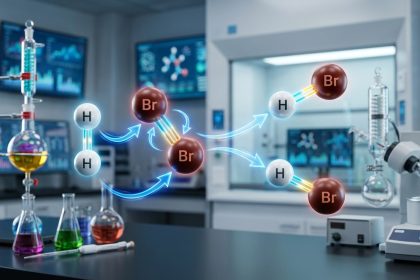
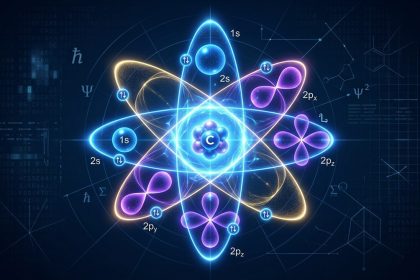
In chemistry, radicals (often referred to as free radicals) are atoms, molecules, or ions with unpaired electrons on an open shell configuration. The unpaired electrons cause them to be highly chemically reactive. Radicals play an important role in combustion, atmospheric chemistry, polymerization, plasma chemistry, biochemistry, and many other chemical processes, including human physiology. For example, superoxide and nitric oxide regulate many biological processes, such as controlling vascular tone. "Radical" and "free radical" are frequently used interchangeably, although a radical may be trapped within a solvent cage or be otherwise bound.
In organic chemistry and biochemistry, a substituent is an atom or group of atoms substituted in place of a hydrogen atom on the parent chain of a hydrocarbon. The terms substituent, side chain, group, branch, or pendant group are used almost interchangeably to describe branches from a parent structure,[1] though certain distinctions are made in the context of polymer chemistry.[2] In polymers, side chains extend from a backbone structure. In proteins side chains are attached to the alpha carbon atoms of the amino acid backbone.
ATRP or Atom Transfer Radical Polymerization is an example of a living polymerization or a controlled/living radical polymerization (CRP). Like its counter part, ATRA or Atom Transfer Radical Addition, it is a means of forming carbon-carbon bond through transition metal catalyst. As the name implies, the atom transfer step is the key step in the reaction responsible for uniform polymer chain growth. ATRP (or transition metal-mediated living radical polymerization) was independently discovered by Pr. Mitsuo Sawamoto[1] and Dr. Jin-Shan Wang of Pr. Matyjaszewski's research group in 1995.[2] This is a typical ATRP reaction:
Absorption spectroscopy refers to spectroscopic techniques that measure the absorption of radiation, as a function of frequency or wavelength, due to its interaction with a sample. The sample absorbs energy, i.e., photons, from the radiating field. The intensity of the absorption varies as a function of frequency, and this variation is the absorption spectrum. Absorption spectroscopy is performed across the electromagnetic spectrum.In chemistry, an alcohol is any organic compound in which a hydroxyl group (-OH) is bound to a carbon atom of an alkyl or substituted alkyl group. An important group of alcohols is formed by the simple acyclic alcohols, the general formula for which is CnH2n+1OH. Of those, ethanol (C2H5OH) is the type of alcohol found in alcoholic beverages, and in common speech the word alcohol means, specifically, ethanol.
Alpha 1-Antitrypsin or α1-antitrypsin (A1AT) is a glycoprotein and generally known as serum trypsin inhibitor. Alpha 1- antitrypsin is also referred to as alpha-1 proteinase inhibitor (A1PI) because it is a serine protease inhibitor (serpin), inhibiting a wide variety of proteases.[1] It protects tissues from enzymes of inflammatory cells, especially elastase, and has a reference range in blood of 1.5 - 3.5 gram/liter (in US the reference range is generally expressed as mg/dL or micromoles), but the concentration can rise manyfold upon acute inflammation.[2] In its absence, elastase is free to break down elastin, which contributes to the elasticity of the lungs, resulting in respiratory complications such as emphysema, or COPD (chronic obstructive pulmonary disease) in adults and cirrhosis in adults or children.Alzheimer's disease (AD), also called Alzheimer disease, Senile Dementia of the Alzheimer Type (SDAT) or simply Alzheimer's, is the most common form of dementia. This incurable, degenerative, and terminal disease was first described by German psychiatrist and neuropathologist Alois Alzheimer in 1906 and was named after him.[1] Generally, it is diagnosed in people over 65 years of age,[2] although the less-prevalent early-onset Alzheimer's can occur much earlier. As of September 2009, this number is reported to be 35 million-plus worldwide.[3] The prevalence of Alzheimer's is thought to reach approximately 107 million people by 2050.[4]Amino acids are molecules containing an amine group, a carboxylic acid group and a side chain that varies between different amino acids. These molecules are particularly important in biochemistry, where this term refers to alpha-amino acids with the general formula H2NCHRCOOH, where R is an organic substituent.[1] In the alpha amino acids, the amino and carboxylate groups are attached to the same carbon atom, which is called the α–carbon. The various alpha amino acids differ in which side chain (R group) is attached to their alpha carbon. These side chains can vary in size from just a hydrogen atom in glycine, to a methyl group in alanine, through to a large heterocyclic group in tryptophan.