Chemical engineering

Related:
Adhesives, Aerospace, Aerospace engineering, Agricultural engineering, American Institute of Chemical Engineers, Ammunition, Applied science, Archaeology, Architectural engineering, Artificial intelligence, Audio engineering, Automotive engineering, Biochemical engineering, Biochemistry, Biocompatibility, Bioinformatics, Biological, Biological engineering, Biology, Biomedical engineering, Biomolecular engineering, Biotechnology, Bomb, Broadcast engineering, Building officials, Business informatics, Ceramic, Ceramic engineering, Chemical, Chemical Technologist, Chemical affinity, Chemical engineer, Chemical industry, Chemical process modeling, Chemical reaction, Chemical reactor, Chemical synthesis, Cheminformatics, Chemistry, Civil engineering, Cloth, Combustion reaction, Communication technology, Computational finance, Computational fluid dynamics, Computer engineering, Computing, Conservation of energy, Conservation of mass, Construction, Construction engineering, Contemporary Food Engineering, Control engineering, Corrosion engineering, Cryogenics, Crystallization processes, Dielectric, Distillation, Distillation Design, Domestic technology, Dye-sensitized solar cell, Earthquake engineering, Education for Chemical Engineers, Educational technology, Edwin N. Lightfoot, Elastomer, Electrical engineering, Electrochemistry, Electronic engineering, Electronics, Energy, Energy balance, Energy storage, Engineering, Engineering geology, Engineering physics, Engineering technician, Engineering technology, Enterprise engineering, Entertainment Engineering, Environmental Engineering Science, Environmental engineering, Environmental technology, Filtration, Fire protection engineering, Fisheries science, Fishing industry, Fluid dynamics, Food and Bioprocess Technology, Food engineering, Food technology, Frank Lees, Fuel cells, Gel, Genetic engineering, George E. Davis, Glasgow, Graphics, Health, Health science, Heat transfer, Henry Edward Armstrong, Hermann von Helmholtz, History of chemical engineering, Home, Human genome project, Hydraulics, Imperial College, Industrial engineering, Industrial gas, Industrial technology, Industry, Information, Information technology, Institution of Chemical Engineers, International Standard Book Number, John Dalton, Josiah Willard Gibbs, List of Chemical Process Simulators, List of Dynamic Process Simulators, List of chemical engineering societies, List of chemical engineers, Machine, Major appliance, Manufacture, Manufacturing, Marine engineering, Mass balance, Mass transfer, Massachusetts Institute of Technology, Material, Materials engineering, Materials science, Mathematics, Mechanical engineering, Mechatronics, Medical technology, Membrane processes (chemistry), Metallurgical engineering, Metallurgy, Microbiology, Microfluidics, Microtechnology, Military, Military communications, Military engineering, Military technology, Military technology and equipment, Mineral Processing, Mineral processing, Mining, Mining engineering, Momentum, Motor vehicle, Music technology, Nanotechnology, Natural environment, Natural gas processing, Naval architecture, Naval engineering, Network engineering, Nicholas A. Peppas, Nicolas Léonard Sadi Carnot, Nuclear engineering, Nuclear reprocessing, Nuclear technology, Nutrition, Ocean engineering, Octave Levenspiel, Oil exploration, Oil refinery, Ontology engineering, Optical engineering, Osborne Reynolds, Outline of chemical engineering, Particle physics, Perry's Chemical Engineers' Handbook, Petrochemicals, Petroleum engineering, Pharmaceuticals, Pharmacology, Physical science, Physics, Plastics, Plastics engineering, Polymer, Process control, Process design (chemical engineering), Process development, Process simulation, Prosthetics, Proteins, Pulp and paper, RF engineering, Reaction kinetics, Reactive distillation, Robert Byron Bird, Rose-Hulman Institute of Technology, Rudolf Clausius, Safety, Safety engineering, Sanitary engineering, Semiconductor device fabrication, Separation of mixture, Separation process, Software engineering, Space, Space technology, Spectroscopy, Speech recognition, Steam engine, Structural engineering, Systematics, Systems engineering, Technology, Telecommunications engineering, Textile engineering, Thermodynamic free energy, Thermodynamics, Tissue engineering, Traffic engineering (transportation), Transport, Transport Phenomena, Transport engineering, Transport phenomena, Trevor Kletz, Unit Operations of Chemical Engineering, Unit operation, Unit operations, University College London, University of Pennsylvania, University of Wisconsin–Madison, Visual technology, Water technology, Wood processing, Yale University, Zoography,

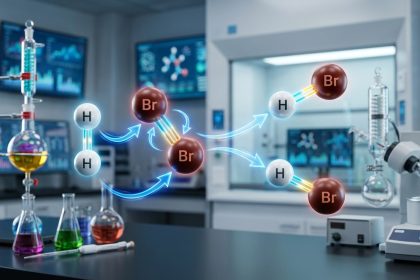
Chemical engineering is the branch of engineering that deals with the application of physical science (e.g. chemistry and physics), and life sciences (e.g. biology, microbiology and biochemistry) with mathematics, to the process of converting raw materials or chemicals into more useful or valuable forms. In addition to producing useful materials, modern chemical engineering is also concerned with pioneering valuable new materials and techniques - such as nanotechnology, fuel cells and biomedical engineering.[1] Chemical engineering largely involves the design, improvement and maintenance of processes involving chemical or biological transformations for large-scale manufacture. Chemical engineers ensure the processes are operated safely, sustainably and economically. Chemical engineers in this branch are usually employed under the title of process engineer. A related term with a wider definition is chemical technology. A person employed in this field is called a chemical engineer.

Additional info
Adhesives
An adhesive, or glue, is a mixture in a liquid or semi-liquid state that adheres or bonds items together. Adhesives may come from either natural or synthetic sources. Some modern adhesives are extremely strong, and are becoming increasingly important in modern construction and industry. The types of materials that can be bonded using adhesives are virtually limitless, but they are especially useful for bonding thin materials. Adhesives usually require a controlled temperature to cure or set. They can be electrically and thermally conductive or non-conductive.[1][2] The earliest date for a simple glue is 200,000 BC[3] and for a compound glue 70,000 BC.[4]
Aerospace
Aerospace comprises the atmosphere of Earth and surrounding space. Typically the term is used to refer to the industry that researches, designs, manufactures, operates, and maintains vehicles moving through air and space. Aerospace is a very diverse field, with a multitude of commercial, industrial and military applications.
Aerospace engineering
Aerospace engineering is the branch of engineering behind the design, construction and science of aircraft and spacecraft. It is broken into two major and overlapping branches: aeronautical engineering and astronautical engineering. The former deals with craft that stay within Earth's atmosphere, and the latter deals with craft that operate outside of Earth's atmosphere.
Agricultural engineering
Agricultural engineering is the engineering discipline that applies engineering science and technology to agricultural production and processing. Agricultural engineering combines the disciplines of animal biology, plant biology, and mechanical, civil and chemical engineering principles with a knowledge of agricultural principles. It involves a broader scope engineering in all the world then any other engineering discipline. It utilizes the knowledge of engineering for making agricultural machinery. [1]
American Institute of Chemical Engineers
The American Institute of Chemical Engineers (AIChE) is a professional organization for chemical engineers.[1] AIChE was established in 1908 with the purpose of establishing chemical engineers as a profession independent from chemists and mechanical engineers.
Ammunition
Ammunition, often informally referred to as ammo, is a generic term derived from the French language la munition which embraced all material used for war (from the Latin munire, to provide), but which in time came to refer specifically to gunpowder and artillery. The collective term for all types of ammunition is munitions. In the widest sense of the word it covers anything that can be used in combat that includes bombs, missiles, warheads, and mines (landmines, naval mines, and anti-personnel mines) – that munitions factories manufacture. The purpose of ammunition is predominantly to project force against a selected target. However, the nature of ammunition use also includes delivery or combat supporting munitions such as pyrotechnic or incendiary compounds. Since the design of the cartridge, the meaning has been transferred to the assembly of a projectile and its propellant in a single package.
Archaeology
Archaeology (sometimes written archæology) or archeology (from Greek ἀρχαιολογία, archaiologia – ἀρχαῖος, arkhaīos, "ancient"; and -λογία, -logiā, "-logy") is the science and humanity[1] that studies historical human cultures through the recovery, documentation, analysis, and interpretation of material culture and environmental data, including architecture, artifacts, biofacts, and landscapes. Archaeology aims to understand humankind through these humanistic endeavors.[1] In the United States the field is commonly considered to be a subset of anthropology, along with physical anthropology, cultural anthropology, and linguistic anthropology,[2] whilst in British and European universities, archaeology is considered as a separate discipline.
Architectural engineering
Architectural engineering, also known as Building engineering, is the application of engineering principles and technology to building design and construction. Definitions of an architectural engineer may refer to:
Artificial intelligence
Artificial intelligence (AI) is the intelligence of machines and the branch of computer science that aims to create it. Textbooks define the field as "the study and design of intelligent agents,"[1] where an intelligent agent is a system that perceives its environment and takes actions that maximize its chances of success.[2] John McCarthy, who coined the term in 1956,[3] defines it as "the science and engineering of making intelligent machines."[4]
Audio engineering
Audio engineering is a part of audio science dealing with the recording and reproduction of sound through mechanical and electronic means. The field draws on many disciplines, including electrical engineering, acoustics, psychoacoustics, and music. Unlike acoustical engineering, audio engineering does not deal with noise control or acoustical design. An audio engineer is closer to the creative and technical aspects of audio rather than formal engineering. An audio engineer must be proficient with different types of recording media, such as analog tape, digital multitrack recorders and workstations, and computer knowledge. With the advent of the digital age, it is becoming more and more important for the audio engineer to be versed in the understanding of software and hardware integration from synchronization to analog to digital transfers.
Automotive engineering
Modern automotive engineering is a branch of vehicle engineering, incorporating elements of mechanical, electrical, electronic, software and safety engineering as applied to the design, manufacture and operation of motorcycles, automobiles, buses and trucks and their respective engineering subsystems.
       Page is a mirror of - Chemical engineering from Wikipedia (licence GFDL, CC-BY-SA 3.0, authors, history, edit this page)