Related:
Absolute zero,
Albert Einstein,
Alkali metal,
Alkaline earth metal,
Angular momentum,
Anisotropy,
Antiferromagnetism,
Atom laser,
Atomic coherence,
BCS theory,
Boiling point,
Boltzmann constant,
Bose–Einstein statistics,
Bose-Einstein correlations,
Bose gas,
Bosenova,
Boson,
Bosons,
Bossa nova,
Caesium,
Carl Wieman,
Chemical potential,
Chromium,
Claude Cohen-Tannoudji,
Colloid,
Cooling curve,
Cooper pair,
Cooper pairs,
Critical point (thermodynamics),
Cylindrical coordinate system,
Deborah S. Jin,
Degenerate matter,
Digital object identifier,
Don Misener,
Electromagnetically induced transparency,
Equation of state,
Eric Allin Cornell,
Eric Cornell,
Fermion,
Fermionic condensate,
Fermions,
Ferromagnetism,
Feshbach resonance,
Gas,
Gas in a box,
Gross–Pitaevskii equation,
Gross-Pitaevskii equation,
Harvard University,
Helium,
Helium-3,
Helium-4,
Hyperfine coupling,
Identical particles,
Integer,
Interference (wave propagation),
Isotope,
JILA,
John F. Allen,
Kelvin,
Lambda point,
Laser cooling,
Leiden University,
Lene Hau,
Liquid,
List of states of matter,
Lithium,
MIT,
Macroscopic quantum self-trapping,
Macroscopic scale,
Magnetic evaporative cooling,
Magnon,
Massachusetts Institute of Technology,
Mean field theory,
Melting point,
Modern Physics Letters B,
Molecule,
Molecules,
Mott insulator,
National Institute of Standards and Technology,
Nature (journal),
Nobel Prize in Physics,
On-Line Encyclopedia of Integer Sequences,
Pauli exclusion principle,
Phase transition,
Photon,
Planck constant,
Plasma (physics),
Potassium,
Potential,
PubMed Identifier,
Pyotr Leonidovich Kapitsa,
Quantized vortex,
Quantum mechanics,
Quantum state,
Quantum statistics,
Quantum vortex,
Quark–gluon plasma,
Riemann zeta function,
Rubidium,
Rudolf Grimm,
Satyendra Nath Bose,
Scattering length,
Schrödinger equation,
Schrödinger field,
Slow light,
Sodium,
Solid,
Speed of light,
Spin-statistics theorem,
Spin (physics),
State of matter,
Statistical mechanics,
Steven Chu,
Strange matter,
Strontium,
Superconductivity,
Supercritical fluid,
Superfluid,
Superfluid film,
Superfluidity,
Supernova,
Supersolid,
Tachyon condensation,
Temperature,
Three-dimensional space,
Timeline of low-temperature technology,
Tonks-Girardeau gas,
Triple point,
Uncertainty principle,
University of Colorado at Boulder,
University of Innsbruck,
Viscosity,
Vortex,
Vortices,
Wave-particle duality,
Wave functions,
William D. Phillips,
Wolfgang Ketterle,
Wolfgang Pauli,
Ytterbium,
Zeitschrift für Physik,
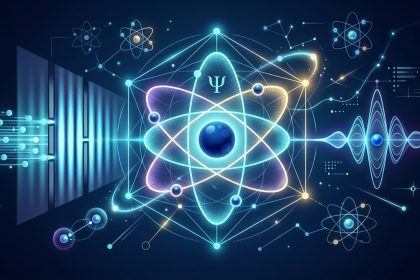
A Bose–Einstein condensate (BEC) is a state of matter of a dilute gas of weakly interacting bosons confined in an external potential and cooled to temperatures very near to absolute zero (0 K, −273.15 °C, or −459.67 °F). Under such conditions, a large fraction of the bosons occupy the lowest quantum state of the external potential, and all wave functions overlap each other, at which point quantum effects become apparent on a macroscopic scale.
Additional info
Absolute zero
Absolute zero is the temperature at which entropy reaches its minimum value. As implied by the laws of thermodynamics, absolute zero cannot be reached by artificial or natural means because this would require a system to be fully removed from the rest of the universe. A system at theoretical absolute zero possesses quantum mechanical zero-point energy. While all molecular motion does not cease at absolute zero, the system does not have enough energy for transference to other systems. It is therefore correct to say that molecular energy is minimal at absolute zero.Albert Einstein
Albert Einstein (pronounced /ˈælbərt ˈaɪnstaɪn/; German: [ˈalbɐt ˈaɪ̯nʃtaɪ̯n] (
listen); 14 March 1879–18 April 1955) was a theoretical physicist who is widely regarded as one of the most influential scientists of all time, and the "greatest physicist ever", according to a 1999 poll of leading physicists[3]. His many contributions to physics include the special and general theories of relativity, the founding of relativistic cosmology, the first post-Newtonian expansion, explaining the perihelion advance of Mercury, prediction of the deflection of light by gravity and gravitational lensing, the first fluctuation dissipation theorem which explained the Brownian movement of molecules, the photon theory and wave-particle duality, the quantum theory of atomic motion in solids, the zero-point energy concept, the semiclassical version of the Schrödinger equation, and the quantum theory of a monatomic gas which predicted Bose–Einstein condensation.Alkali metal
The alkali metals are a series of chemical elements forming Group 1 (IUPAC style) of the periodic table: lithium (Li), sodium (Na), potassium (K), rubidium (Rb), caesium (Cs), and francium (Fr). (Hydrogen, although nominally also a member of Group 1, very rarely exhibits behavior comparable to the alkali metals). The alkali metals provide one of the best examples of group trends in properties in the periodic table, with well characterized homologous behavior down the group.Alkaline earth metal
The alkaline earth metals are a series of elements comprising Group 2 (IUPAC style) (Group IIA) of the periodic table: beryllium (Be), magnesium (Mg), calcium (Ca), strontium (Sr), barium (Ba) and radium (Ra). This specific group in the periodic table owes its name to their oxides that simply give basic alkaline solutions. These elements melt at such high temperature that they remain solids (“earths”) in fires. The alkaline earth metals provide a good example of group trends in properties in the periodic table, with well-characterized homologous behavior down the group. With the exception of Be and Mg, the metals have a distinguishable flame color, orange-red for Ca, magenta-red for Sr, green for Ba and crimson red for Ra.Angular momentum
Angular momentum is a vector quantity that is useful in describing the rotational state of a physical system. The angular momentum L of a particle with respect to some point of origin is aAnisotropy
Anisotropy (/ˌænaɪˈsɒtrəpi/) is the property of being directionally dependent, as opposed to isotropy, which implies homogeneity in all directions. It can be defined as a difference, when measured along different axes, in a material's physical property (absorbance, refractive index, density, etc.) An example of anisotropy is the light coming through a polarizer.Antiferromagnetism
In materials that exhibit antiferromagnetism, the magnetic moments of atoms or molecules, usually related to the spins of electrons, align in a regular pattern with neighboring spins (on different sublattices) pointing in opposite directions. This is, like ferromagnetism and ferrimagnetism, a manifestation of ordered magnetism. Generally, antiferromagnetic order may exist at sufficiently low temperatures, vanishing at and above a certain temperature, the Néel temperature (named after Louis Néel, who had first identified this type of magnetic ordering).[1] Above the Néel temperature, the material is typically paramagnetic.Atom laser
An atom laser is a coherent state of propagating atoms. They are created out of a Bose-Einstein condensate of atoms that are output coupled using various techniques. Much like an optical laser, an atom laser is a coherent beam that behaves like a wave. There has been some arguments that the term "atom laser" is misleading. Indeed, "laser" stands for "Light Amplification by Stimulated Emission of Radiation" which is not particularly related to the physical object called an atom laser, and if at all describes more accurately the Bose-Einstein condensate (BEC). The terminology most widely used in the community today is to distinguish between the BEC, typically obtained by evaporation in a conservative trap, from the atom laser itself, which is a propagating atomic wave obtained by extraction from a previously realized BEC. Some ongoing experimental research tries to obtain directly an atom laser from a "hot" beam of atoms without making a trapped BEC first.Atomic coherence
In physics, atomic coherence is the induced coherence between levels of a multi-level atomic system sometimes observed when it interacts with a coherent electromagnetic field.BCS theory
BCS theory is the first microscopic theory of superconductivity, proposed by Bardeen, Cooper, and Schrieffer in 1957 since the discovery of superconductivity in 1911. It describes superconductivity as a microscopic effect caused by a "condensation" of pairs of electrons into a boson-like state.Boiling point
The boiling point of an element or a substance is the temperature at which the vapor pressure of the liquid equals the environmental pressure surrounding the liquid.[1][2] A liquid in a vacuum environment has a lower boiling point than when the liquid is at atmospheric pressure. A liquid in a high pressure environment has a higher boiling point than when the liquid is at atmospheric pressure. In other words, the boiling point of liquids varies with and depends upon the surrounding environmental pressure. Different liquids boil at different temperatures. The normal boiling point (also called the atmospheric boiling point or the atmospheric pressure boiling point) of a liquid is the special case in which the vapor pressure of the liquid equals the defined atmospheric pressure at sea level, 1 atmosphere.[3][4] At that temperature, the vapor pressure of the liquid becomes sufficient to overcome atmospheric pressure and lift the liquid to form bubbles inside the bulk of the liquid. The standard boiling point is now (as of 1982) defined by IUPAC as the temperature at which boiling occurs under a pressure of 1 bar.[5]Boltzmann constant
The Boltzmann constant (k or kB) is the physical constant relating energy at the particle level with temperature observed at the bulk level. It is the gas constant R divided by the Avogadro constant NA:Bose–Einstein statistics
In statistical mechanics, Bose–Einstein statistics (or more colloquially B–E statistics) determines the statistical distribution of identical indistinguishable bosons over the energy states in thermal equilibrium.Bose-Einstein correlations
Bose–Einstein correlations[1][2] are correlations between identical bosons. They have important applications in astronomy, optics, particle and nuclear physics.Bose gas
An ideal Bose gas is a quantum-mechanical version of a classical ideal gas. It is composed of bosons, which have an integer value of spin, and obey Bose-Einstein statistics. The statistical mechanics of bosons were developed by Satyendra Nath Bose for photons, and extended to massive particles by Albert Einstein who realized that an ideal gas of bosons would form a condensate at a low enough temperature, unlike a classical ideal gas. This condensate is known as a Bose-Einstein condensate.Bosenova
A bosenova or bose supernova is a very small, supernova-like explosion, which can be induced in a Bose–Einstein condensate (BEC) by changing the magnetic field in which the BEC is located, so that the BEC quantum wavefunction's self-interaction becomes attractive.Boson
In particle physics, bosons are subatomic particles which obey Bose–Einstein statistics; they are named after Satyendra Nath Bose and Albert Einstein. In contrast to fermions, which obey Fermi-Dirac statistics, several bosons can occupy the same quantum state. Thus, bosons with the same energy can occupy the same place in space. Therefore bosons are often force carrier particles while fermions are usually associated with matter, though in quantum physics the distinction between the two concepts is not clear cut.Bosons
In particle physics, bosons are subatomic particles which obey Bose–Einstein statistics; they are named after Satyendra Nath Bose and Albert Einstein. In contrast to fermions, which obey Fermi-Dirac statistics, several bosons can occupy the same quantum state. Thus, bosons with the same energy can occupy the same place in space. Therefore bosons are often force carrier particles while fermions are usually associated with matter, though in quantum physics the distinction between the two concepts is not clear cut.Bossa nova
Bossa nova (
pronunciation (help·info)) is a style of Brazilian music popularized by Antônio Carlos Jobim, Vinicius de Moraes and João Gilberto. Bossa nova (which is Portuguese for "new trend") acquired a large following, initially by young musicians and college students.[1] Although the bossa nova movement only lasted six years (1958–63), it contributed a number of songs to the standard jazz repertoire.Caesium
Caesium or cesium (pronounced /ˈsiːziəm/, SEE-zee-əm) is the chemical element with the symbol Cs and atomic number 55. It is a soft, silvery-gold alkali metal with a melting point of 28 °C (83 °F), which makes it one of only five metals that are liquid at or near room temperature.[2] Caesium is most notably used in atomic clocks.Carl Wieman
Carl Edwin Wieman (born March 26, 1951) is an American physicist at the University of British Columbia and Nobel Prize in Physics laureate for his production in 1995 with Eric Allin Cornell, the first true Bose-Einstein condensate.