
Stop blanking on formulas mid-test. Learn why passive review fails and which active study techniques build memory that holds under exam pressure....
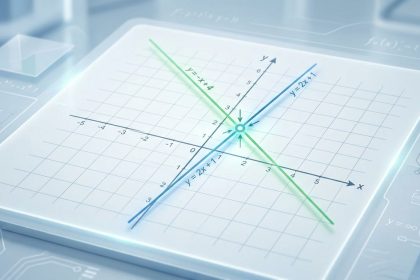
Picture two lines on a coordinate plane. One line climbs upward as it moves right. The other line cuts across at a steep angle. At some point, those two lines cross. That crossing point is the solutio...
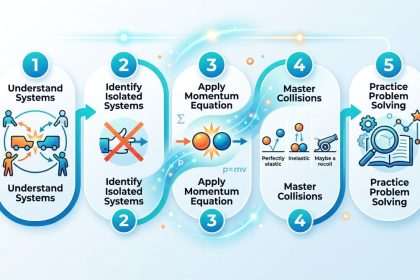
Physics can feel like a foreign language sometimes. You sit in class, the teacher writes equations on the board, and everyone nods along. But later, when you face a problem about two cars colliding or...
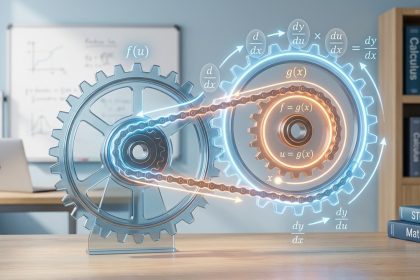
If you have made it to calculus, you already know how to take a derivative. You can handle a simple power rule like d/dx of x^5 equals 5x^4. You know that the derivative of sin(x) is cos(x). Then your...

You spent years in the lab dissecting organisms, memorizing metabolic pathways, and running PCR tests. Now you are ready for the real world, but you want to apply that knowledge to something bigger: p...

You spent an hour measuring every drop of titrant, carefully noting the volume at the endpoint. Then you sit down to calculate the pH and your answer is nowhere near what the lab manual says. Or worse...
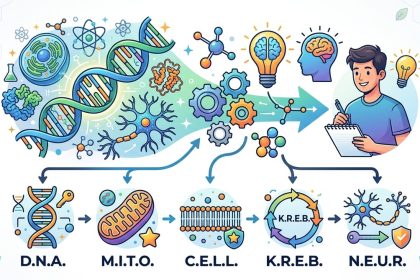
Biology demands a lot from your memory. From the stages of mitosis to the names of every bone in the hand, the sheer volume of terms can feel overwhelming. You sit down to study, review your notes, an...
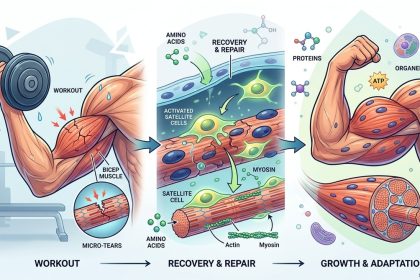
You just finished a tough set of bicep curls. Your arms feel like jelly. You look in the mirror and think, "Is anything actually happening in there?" The answer is yes. A lot. And most of it happens w...
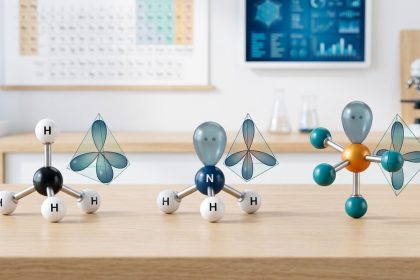
You have a molecule, and you need to know its shape. Maybe it’s for a homework assignment, maybe it’s for an exam question that’s worth a few points. Either way, staring at a chemical formula and tryi...
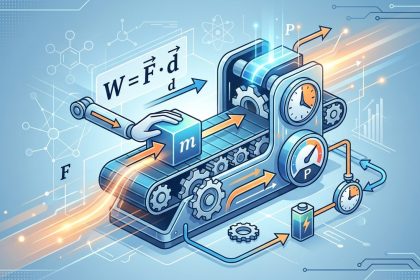
If you have ever pushed a heavy box across the floor or lifted a backpack onto a shelf, you have experienced work and power in action. But in physics, these words have very specific meanings that may ...